If you’ve noticed thin, bright green shoots that smell like onion or garlic when crushed, you’re dealing with onion grass. For homeowners across Pennsylvania, New Jersey, and Delaware, this is one of the most stubborn common lawn weeds. It survives winter, spreads quickly underground, and resists most store-bought weed killers.
This guide explains how to get rid of onion grass using methods that work in Tri-State lawns. You’ll learn how to identify wild onion correctly, why pulling fails, when treatment works best, and how professional lawn care stops regrowth without harming your grass.
Stop guessing what’s invading your lawn. Use our tool below to identify the weed and get a custom removal plan.
Identify Wild Onion in Your Yard
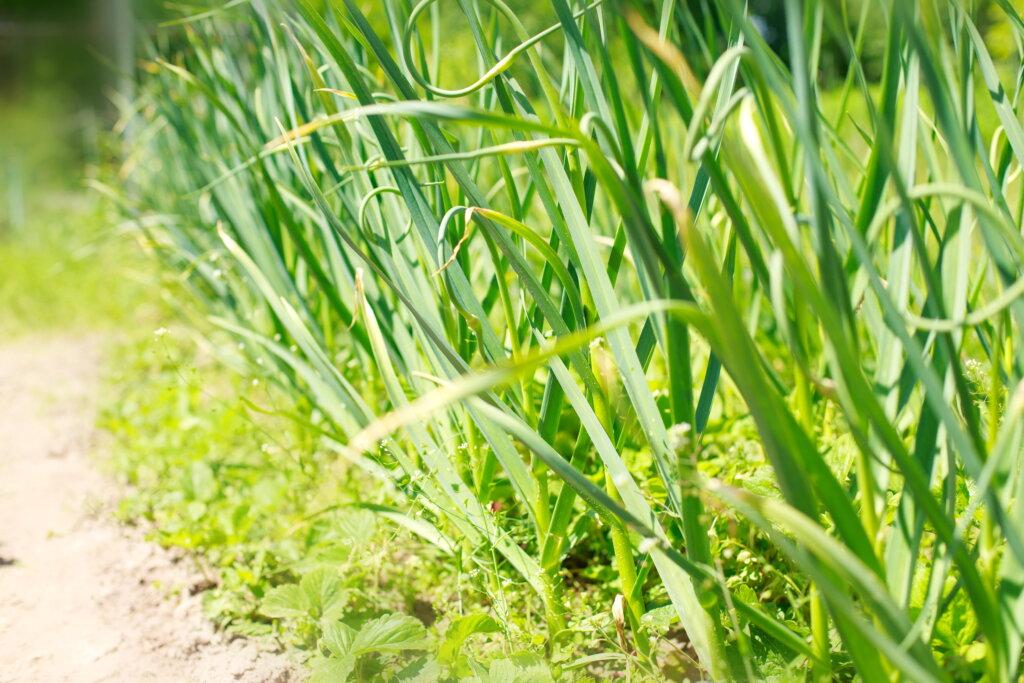
Correct identification matters. Wild onion, onion grass, and wild garlic are closely related plants in the allium family. Wild onion’s scientific name is Allium canadense. They look similar to grass at first glance, but behave differently.
Still unsure what’s growing in your yard? Distinguishing between these weeds can be tricky. Use the interactive identifier below to confirm exactly which weed is invading your lawn and get a tailored solution.
Onion Grass vs. Wild Garlic
Use the crush test. Pinch a leaf between your fingers:
- Strong onion smell → wild onion or onion grass
- Strong garlic smell → wild garlic
Look at the leaves:
- Onion grass and wild onion have flat, solid blades
- Wild garlic has hollow, round leaves
Both are perennial weeds with underground bulbs and waxy leaf coatings. That waxy surface causes herbicides to bead up instead of sticking, which is why these weeds survive year after year. Wild onion and wild garlic are perennial weeds that produce reproductive structures in the spring and spread primarily through underground bulblets, which can remain in the soil and germinate in both fall and spring.
Common Mistakes When Trying to Remove Onion Grass
Pulling the Leaves Instead of Removing Underground Bulbs
Hand-pulling removes visible shoots, not the underground bulbs. Each clump contains multiple bulblets. Leave even one behind, and you’ll see two or three new shoots within weeks. Extract the complete bulb cluster and roots.
Digging at the Wrong Time
Digging works best when the soil is moist in early spring or fall. Dry, compacted soil causes bulbs to snap off and stay in the ground. Using a trowel or spade to dig at least 6 inches deep ensures you pull out all bulbs and attached root structures. Clay-heavy soil requires patience; bulbs slip away if the ground isn’t soft.
Using the Wrong Herbicide
Many homeowners spray broadleaf weed products, expecting results. Onion grass isn’t a typical broadleaf weed. Its waxy coating and narrow leaves limit absorption. Non-selective herbicides like glyphosate can kill wild onions, but they also kill surrounding grass if applied carelessly.
Many products that work well for dandelion control treatments don’t perform the same way on onion grass, which is why these weeds often survive even after other broadleaf weeds disappear.
How to Kill Wild Onions: The Professional Approach
At Terra Lawn Care Specialists, we’ve been treating onion grass since 2003. Our approach is overseen by an in-house agronomist and carried out by state-certified technicians. Here’s what works in Tri-State lawns:
Timing (Spring and Fall Treatment Windows)
Wild onion is most vulnerable when actively growing but not flowering:
- Early spring: Plants push nutrients upward from the bulbs
- Late fall: Plants store energy in the bulbs for winter
Treating in late spring or summer rarely works. By then, the plant has hardened off and sealed itself against sprays. Fall applications are especially effective because nutrients are moving back into the bulbs, making fall weed control one of the most reliable windows for long-term onion grass suppression.
Herbicide Strategy That Protects Your Lawn
We use selective herbicides designed to work on wild onion grass without damaging cool-season turf like Kentucky bluegrass and fescue. In severe cases, spot treatments with glyphosate may be used with shielding and precision application to avoid injury to other plants. Homeowners should consult with a landscaping expert before applying any herbicide or pesticide to their lawn.
Soil type, grass density, and moisture levels all affect results—especially in clay-heavy areas like Montgomery, Bucks, and Chester Counties.
Natural Methods to Get Rid of Wild Onion
Some homeowners prefer organic methods. These help with small infestations but require persistence.
Digging the Entire Clump
Dig at least six inches deep using a trowel or weeding fork. For best results, work when the soil is moist in spring or late fall. Dig deep enough to capture every bulb in the clump.
Smothering
Covering affected areas with cardboard and thick mulch can starve onion grass of light. This takes at least a year and works best in garden beds, not established lawns.
Lawn Care Tips to Prevent Onion Grass
The best defense against onion grass is a thick, healthy lawn.
Regular Mowing
Beyond limiting seed production, field research published by Agriculture Victoria found that cutting onion grass to 1 cm (0.4 inches) every three to five weeks reduced underground corm mass by about 70%. This level of repeated defoliation significantly weakens the plant’s energy reserves over time, reducing its ability to rebound, even though mowing alone will not fully eliminate established onion grass.
Improve Soil Health
Onion grass establishes more easily in thin, weakened turf than in healthy lawns. While these plants tolerate a range of soil conditions, maintaining proper pH levels (around 6.5) helps your grass grow thick enough to crowd out weeds naturally. Reviewing humic acid and its impact on lawn health provides additional ways to improve soil structure and root density.
Feed and Thicken the Lawn
A well-fed, thick lawn leaves little space for wild garlic, wild onion, and other weeds to take hold. Avoiding overwatering or overfertilizing the area can help prevent onion grass from taking over. Removing excess debris from your lawn also helps prevent growth.
Professional Lawn Care Makes the Difference
Eliminating onion grass requires a combination of methods, including physical removal, herbicide application, and proper lawn maintenance. Using professional weed control is one of the most effective ways to manage onion grass while protecting the health of your lawn. Lawn care professionals use smart, proven methods to stop onion grass from ruining lawns.
If you’re ready to stop fighting onion grass every spring, contact Terra Lawn Care Specialists for a free estimate from a state-certified technician. We’ll treat your lawn like it’s our own.
Frequently Asked Questions about How to Get Rid of Onion Grass
Selective herbicides labeled for wild onion control kill the plant without harming your grass. Unlike contact killers that only burn the leaves, these products move through the plant to destroy underground bulbs. Apply them during active growth periods in spring or fall for best results.
Onion grass spreads through underground bulbs and can stay active for several years if nothing interrupts its growth cycle. Thin turf, compacted soil, and inconsistent lawn care give it room to spread. Many homeowners also mistake it for regular grass and mow over it, which allows the bulbs to stay in the ground and keep producing new shoots season after season.
Professional lawn care programs typically combine selective herbicides with good cultural practices like aeration and proper fertilization. For homeowners trying natural methods, digging out the entire clump or using spot treatments can help, but results take time. An organic fertilizer can strengthen turf so onion grass struggles to compete, but fertilizer alone won’t eliminate established bulbs.
Vinegar damages the leaves, but it rarely kills the bulbs, so the plant often comes back. It also harms nearby grass and other plants, including edible ones like chives, if they’re close by. Vinegar isn’t safe for pets if they come into contact with treated areas before it dries, and repeated applications stress the soil without solving the problem.