If you’ve ever noticed your grass looking tired, patchy, or thin, the culprit might be compacted soil. Many Pennsylvania lawns in parts of Montgomery and Delaware counties often face heavy clay soil and seasonal stress that restricts grass roots from getting enough air, water, and nutrients. That’s where a lawn aerator comes in.
A lawn aerator punches holes in compacted ground so air, water, and fertilizer can penetrate. But not all aerators work—manual tools, spike models, plug aerators, and rental machines vary wildly in effectiveness.
This guide explains what a lawn aerator tool does, which types actually work for Pennsylvania lawns, and when calling Terra Lawn Care Specialists makes more sense than DIY.
What a Lawn Aerator Does
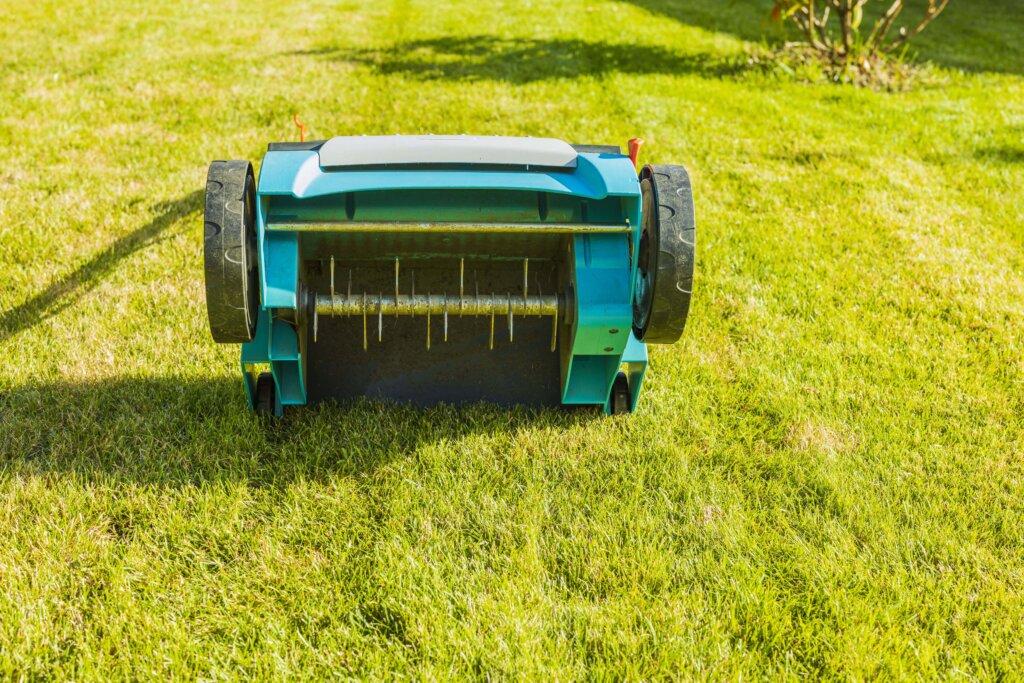
A lawn aerator relieves soil compaction. Simple, but execution matters.
Foot traffic, mowers, pets, and rain compact soil, limiting root growth and water absorption. Aerators open holes, improving air, water, and nutrient flow, helping grass thicken and bare spots fill in. Regular maintenance can also keep your lawn healthy and thriving throughout the growing season.
Digging into compacted clay with a shovel? Brutal work, the kind that makes your forearms burn and leaves blisters even through gloves. But a proper core aerator does the job faster, assuming you’ve got the right equipment.
Types of Lawn Aerators
Not all aerators perform well in Pennsylvania’s clay-heavy soil, so choosing the right type matters for getting real results.
Core/Plug Aerators
These machines pull actual plugs of soil, typically 2–4 inches deep, as per the University of Maryland Extension, which sit on your lawn temporarily before breaking down. You can rake them if you prefer a cleaner look.
Core aerators remain the most effective option for dense clay soil in Montgomery, Bucks, Chester, Berks, and Delaware counties. By removing soil rather than simply poking holes, they ease compaction, improve water flow, deepen root growth, and boost air exchange.
The downside is weight and the need for proper technique. But for Pennsylvania clay, this is the most reliable type of aerator for meaningful lawn improvement.
Spike Aerators
Spike aerators push tines directly into the ground without removing soil. In compacted clay, this often compresses the soil sideways, and the holes tend to close quickly.
They can be helpful in sandy or lightly compacted areas, but for Pennsylvania’s clay soils, spike aerators are less effective in dense clay because they can compress soil rather than relieve compaction. While easy to use, spike aerators often don’t provide the deep relief needed for clay soils.
Manual Aerators
These hand- or foot-powered tools work well for small sections such as around mailboxes, garden beds, or isolated problem areas.
However, using a manual lawn aerator tool across an entire yard requires hours of effort and can be physically demanding. They’re best reserved for spot-treating rather than full-yard aeration.
Tow-Behind Aerators
Attached to the back of a riding mower, these models cover more ground with less effort. However, the penetration depth varies, and lighter mowers may not apply enough downward pressure for compacted clay.
Tow-behind aerators can be effective in loamier soils or for mild compaction. In dense Pennsylvania clay, they often don’t reach the depth needed for meaningful results. They tend to appeal to homeowners who already own a riding mower and want a quicker method.
Rental Aerators
Most rental aerators are walk-behind core aerators designed for homeowners. They can pull decent plugs when soil moisture is ideal and offer better results than spike or manual tools. However, they’re still not as powerful or consistent as commercial machines, especially on dense clay.
Walk-Behind Aerators (Typical Rental Units)
Walk-behind units weigh 150+ pounds and use rotating tines to pull soil plugs as you guide the machine. They work well when the ground is moist, but require physical effort, multiple passes, and careful handling around sprinklers and tight areas. Results can vary depending on operator skill and soil conditions.
Stand-On Aerators (Commercial-Grade Performance)
Stand-on aerators are the machines lawn care professionals rely on. The operator’s weight and the machine’s power allow them to consistently penetrate 2–4 inches into compacted clay.
They cover large areas efficiently, pull clean cores, and deliver results that rental machines simply can’t match. These are the highest-performing aerators for Pennsylvania lawns.
Renting vs Buying
- Cost: Renting typically costs about $55–$75 for four hours or $80–$120 per day. Buying a walk-behind or tow-behind aerator is a big investment and adds storage and maintenance, so renting is usually the easier choice for once-or-twice-a-year aeration.
- Learning Curve & Handling: Walk-behind aerators are heavy, loud, and need steady control for consistent depth. Most first-timers end up making extra passes, which eats into rental time and leads to uneven results.
- Soil Moisture & Timing Sensitivity: Clay-heavy soil adds pressure to time aeration around rain or irrigation, which can be tricky in Pennsylvania’s shifting weather. Timing is crucial. Rentals work best when soil conditions are right, so knowing when to aerate your lawn helps you avoid frustration and get the most out of the session.
- Weight, Transport & Fatigue: Gas aerators are heavy and often need two people to load and unload. Moving them across the yard and around landscaping quickly becomes tiring and often slows the job down.
- When Buying Makes Sense: Buying works well for people with acreage or several properties. For typical suburban yards, the effort of storing and handling the machine usually outweighs any savings.
DIY vs Professional Aeration
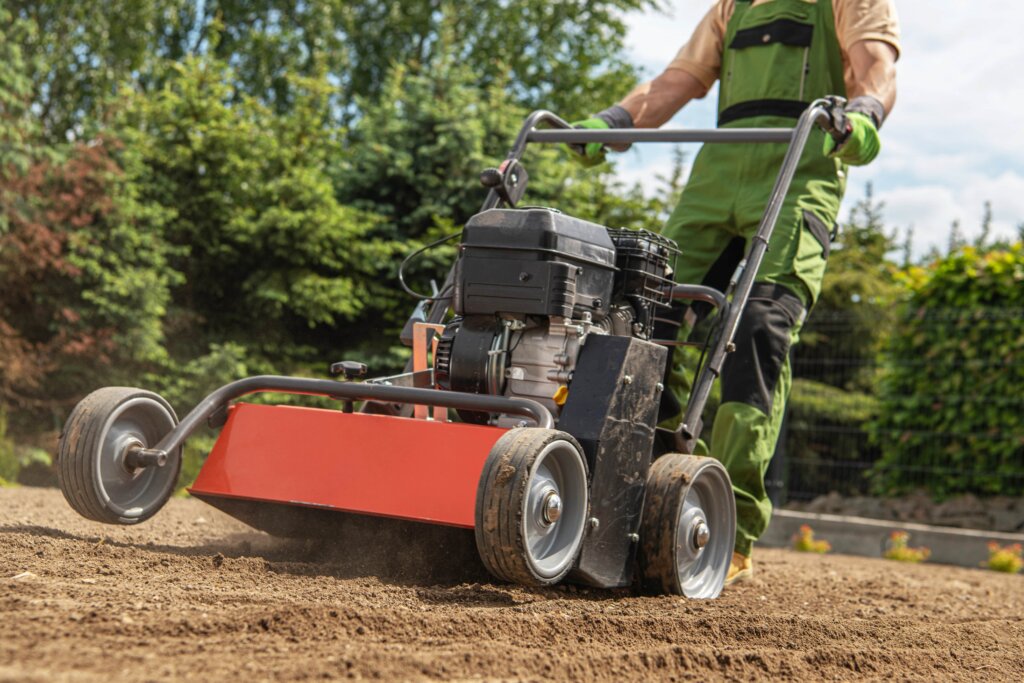
Aerating your lawn can be done yourself or with professional help, but results and effort vary significantly.
| DIY Aeration | Professional Aeration |
| Satisfying for hands-on homeowners, but depth and consistency can be uneven. | Uses commercial-grade equipment for uniform core depth and spacing. |
| Home machines are less powerful, especially in clay-heavy soil prone to soil compaction. | Machines penetrate dense clay soil for healthier turf and stronger roots. |
| Physically demanding—walking behind an aerator can feel like a workout. | Trained technicians handle the job efficiently, saving time and effort. |
| Best for small yards or light compaction. | Ideal for large properties, high-traffic areas, or heavily compacted lawns. |
Choosing the right method depends on your yard size, soil type, and how much effort you want to invest. Professional aeration often delivers better performance and long-term results.
When DIY Aeration Is Worth Trying
DIY works best for small yards with light compaction or sandy, loamy soil. Aerating around garden beds or trouble spots can improve grass health without hiring a service.
It’s satisfying to watch the plugs pop out and see that compacted soil loosens, but proper results depend on soil moisture, using the tines correctly, and stamina for multiple passes. Properties under 5,000 square feet are manageable; anything bigger quickly tests your patience and your back.
When DIY Aeration Usually Fails
Pennsylvania clay resists most consumer devices. Dry soil turns a walk-behind rental into a heavy vibrating machine that barely scratches the surface. Tines bounce, plugs stay small, and problem areas remain compacted, which aligns with studies from PennState Extension about the effects of soil compaction.
Large yards are exhausting—moving 150-pound equipment across half an acre wears you down. High-traffic zones, pet paths, and dense clay need deeper cores than rentals can pull.
Without proper depth and spacing, your efforts often give temporary results at best. That’s why a professional lawn aerator service consistently delivers stronger, healthier turf.
How Terra Uses Professional Aerators
The team at Terra Lawn Care uses commercial-grade lawn aerators built for Pennsylvania’s clay-heavy soil. Machines consistently pull 2-4 inch cores, handle high-traffic or pet-worn areas, and provide precision control that consumer rentals can’t match.
Technicians assess turf before aerating, identifying problem spots and adjusting settings for even coverage. They protect sprinklers and landscaping while ensuring soil moisture is ideal.
After aeration, fertilizer, seed, or soil amendments are applied to maximise recovery and growth. Typical yards are done in about 45 minutes, leaving thicker, greener grass with long-lasting benefits.
So, Do You Actually Need a Lawn Aerator?
For small yards with sandy or loamy soil, occasional DIY aeration can work. But larger lawns with clay soil, kids, pets, and regular traffic need professional aeration to break up compaction and support strong roots.
Renting a lawn aerator is an option if your yard is small and you have the stamina, but Pennsylvania clay can make DIY efforts frustrating and inconsistent. Hiring Terra ensures clients experience the full benefits of lawn aeration, including deeper roots, better water absorption, and thicker, greener grass.
Skip the hassle and see real results. Contact Terra Lawn Care Specialists today to schedule professional aeration for your yard.
Frequently Asked Questions About Lawn Aerator
The best time is spring or early fall when the grass is actively growing. Soil should be moist for tines to penetrate easily, but not muddy. Avoid dry soil—it’s difficult to pull plugs and can strain equipment.
In Pennsylvania, early spring (April-May) and early fall (September-early October) are ideal. These seasons provide optimal soil moisture and temperature for recovery. Wait too long into October, and the grass has less time to benefit before winter.
Yes, a lawn aerator reduces soil compaction and improves air, water, and nutrient access to roots. After mowing and raking, holes created by tines allow fertilizer and moisture to reach deeper soil, promoting healthier turf and stronger growth.
Many customers notice greener, thicker grass within weeks. Benefits enhance over time as roots grow deeper and turf becomes more resilient to drought, traffic, and seasonal stress. One of the most cost-effective services for lawn health.
Early October can work if the soil isn’t frozen and the grass is actively growing. Whether you purchase a rental or use a stand-on or walk-behind unit, cover the soil evenly for proper cores.
Waiting too long reduces benefits—grass lacks recovery time before winter. Mid-to-late October is risky. The grass may not have enough growing days to take advantage of improved soil conditions. Cancel late-season plans if frost is imminent.
A plug aerator is more effective for dense clay soil common in Pennsylvania. Plugs removed by tines reduce compaction and allow water, fertilizer, and air to enhance root growth. Cores create genuine openings that stay open, improving drainage and nutrient flow.
Spike aerators seem easier to operate and have a lower price, but can worsen compaction. Spikes push soil sideways rather than removing it, making problems worse in clay. For DIY jobs, some use spike units for light aeration in sandy soil, but professionals recommend plug aerators for best performance and long-term health. It’s the better choice for quality results.