Lawn grub control requires precision, not guesswork. In Pennsylvania, New Jersey, and Delaware, grub damage follows predictable patterns tied to soil temperature, beetle activity, and cool-season grasses. When timing and product choice are right, grubs are manageable. When they’re wrong, lawns fail fast.
This guide explains how to identify lawn grubs, recognize early grub damage, choose the right grub control products, and decide when professional treatment makes sense. The approach reflects methods we’ve adapted from golf course turf management for residential lawns across the Tri-State area.
If you are worried about spots in your lawn right now, use our diagnostic tool below to see if you are in the active treatment window.
Lawn Grubs (Know What You’re Dealing With)
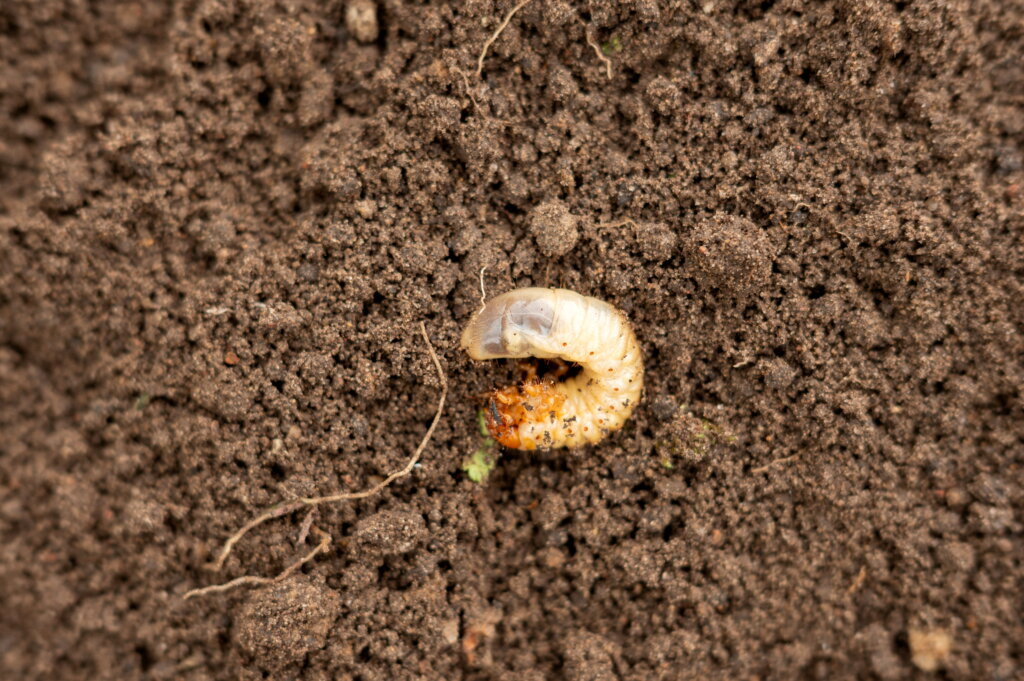
Lawn grubs are the larval stage of scarab beetles, and understanding their biology is the foundation of effective outdoor pest control. While Japanese beetles are widely known, they are no longer the primary turf threat in much of the Tri-State region.
Rutgers Cooperative Extension identifies the European chafer and Oriental beetle as the most damaging white grub species locally, with masked chafers and Japanese beetles contributing depending on soil conditions and turf type.
Adult beetles emerge in early summer. Female beetles lay eggs in turf areas, especially lawns with moist soil. When eggs hatch, larvae feed underground on grass roots.
The One-Year Life Cycle That Causes Big Problems
Most white grub species complete a one-year life cycle:
- Early summer: Adult beetles emerge and lay eggs
- Mid-summer: Eggs hatch; young grubs begin feeding
- Late summer through fall: Larger grubs cause visible turf damage
- Winter: Grubs burrow 2–6 inches below the soil surface
- Following spring: Grubs briefly resume feeding before pupating into beetles
This predictable cycle is why professional pest control services focus on intervention during the most vulnerable larval stages.
Although grubs are present for much of the year, the most severe damage occurs from August through late October, when feeding on turf roots is most aggressive. Most spring lawn damage is the result of fall feeding, not active spring infestations.
Signs of Grubs in Your Lawn
Grub damage often develops quietly below the surface until grass roots are no longer able to support healthy turf growth. One of the simplest ways to confirm a problem is the ‘carpet test.’ If sod in a damaged area can be peeled back easily, the roots have likely been severely reduced by feeding. For a detailed explanation of identification methods, see what lawn grubs are and how to spot them early.
Research from the University of Illinois Extension shows that healthy, well-maintained lawns can often tolerate 10 to 12 grubs per square foot before chemical treatment becomes necessary. When grub numbers fall below this threshold, turf may recover on its own with proper watering and care.
Unsure if it’s grubs or just dry weather? Symptoms can be confusing, and timing is critical. Use the interactive tool below to cross-reference your specific lawn symptoms with the current seasonal treatment window.
Grub Damage vs. Drought Stress
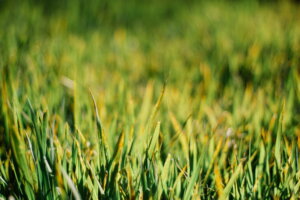
Grub damage is often mistaken for drought stress, but the key difference is what’s happening below the surface. Grass affected by drought typically still has intact roots and remains anchored to the soil, even though the blades may appear brown or wilted.
In contrast, grub-damaged turf separates easily from the soil because the roots have been eaten away. When grubs feed on grass roots, the lawn loses access to water and nutrients, which can cause severe decline even when irrigation is adequate.
Accurate diagnosis is essential; this is where Terra’s Lawn Care expertise combines turf health assessment with targeted treatment.
Timing Is Everything in Lawn Grub Control
In the Tri-State climate, the active ingredient you choose dictates when you must apply it.
1. Preventative (The Best Defense)
These products kill grubs as they hatch.
Chlorantraniliprole (Acelepryn)
It must be applied early in the season, typically between mid-April and early June, because it requires 60 to 90 days to position itself in the root zone where grubs will feed.
Imidacloprid (Merit)
Best applied June through mid-July. Rutgers Extension warns that applications made too early—especially in April or May—may degrade before the August grub hatch, reducing control.
2. Curative (The Emergency Rescue)
If preventative timing is missed and damage appears in late summer or early fall, fast-acting curative products such as Trichlorfon (Dylox) may be used. These work quickly but provide no residual protection. Once grubs reach full size, curative success declines sharply.
Grub Control Calendar for PA, NJ & DE
| Month | Grub Activity | Best Action |
|---|---|---|
| April–May | Overwintered grubs feed lightly | Early preventive options |
| June–Mid July | Eggs laid, larvae hatch | Preventative products |
| Late July–Early August | Young grubs feeding | Last window for prevention |
| Late Summer–Fall | Large grubs active | Curative treatment |
| Winter | Grubs burrow deeper | No treatment effective |
Key facts
Timing drives results. Preventative treatments work best in June or July, when grubs are small and vulnerable. Curative treatments are most effective in late summer or early fall. Grubs feed most aggressively from early August through late October, which is why damage often appears suddenly.
Grub Control Products: What Actually Works
Many consumer treatments fail due to incorrect timing, wrong active ingredients, or uneven application.
Preventative Insecticides
- Chlorantraniliprole
- Imidacloprid
- Thiamethoxam
- Clothianidin
Professional formulations such as Acelepryn SC and Acelepryn G are widely used due to reliability and turf safety.
Curative Products
- Trichlorfon (Dylox)
- Carbaryl
Products containing only bifenthrin, permethrin, or lambda-cyhalothrin do not control grubs.
Watering Makes or Breaks Grub Control
Watering is critical. Rutgers Extension recommends 0.5 inches of irrigation immediately after application to move the product into the root zone. Without proper watering, treatments remain on the surface and fail.
Avoid excessive irrigation during July and August. Drier soil discourages beetles from laying eggs.
Milky Spore and Biological Options
Milky spore affects only Japanese beetle grubs and has shown limited effectiveness in the Tri-State region. Research from UNH and Cornell confirms it does not control European chafers or Oriental beetles.
Beneficial nematodes (Heterorhabditis bacteriophora) can achieve 60–80% grub mortality when applied in late summer with consistent soil moisture, though results vary by soil type.
Integrated Pest Management for Grubs
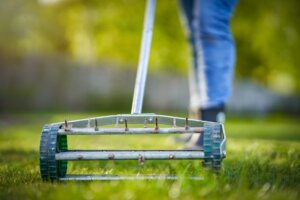
Grub control works best when it is part of a complete turf care program rather than a stand-alone treatment. Maintaining a mowing height of 3 inches or higher helps promote a deeper, healthier root system that can better tolerate stress. Avoiding excess nitrogen during mid-summer reduces additional strain on the grass, while aerating compacted soil improves air and water movement to the roots.
During periods of extreme heat, allowing turf to go dormant can also protect the lawn and limit further damage while it recovers. Research from Cornell shows that only about 20% of home lawns actually require chemical grub treatment.
DIY vs. Professional Grub Control
DIY treatments often fail due to:
- Incorrect timing
- Uneven spreader calibration
- Wrong active ingredient
- Inadequate watering
Professional grub control services rely on soil testing, calibrated equipment, and precise application rates per square foot.
The Terra Difference in the Tri-State Area
- Family-owned since 2003
- In-house agronomist with 15 years of golf course experience
- State-certified technicians in PA, NJ, and DE
- No subcontractors
- 95% customer retention rate
Local soil knowledge matters. What works in a neighbor’s lawn, or a national guide, often misses the mark here.
Ground Covers, Flower Beds, and Grub Movement
Grubs don’t stop at turf. They migrate between turf areas, ground covers, and flower beds when conditions allow. Treating only one section of the lawn can leave a grub problem unresolved.
Season-long grub control accounts for this movement across the entire property.
Take the Next Step
Whether you’re seeing small patches now or want to prevent a grub problem next spring, local expertise makes the difference.
For lawn grub control in PA, NJ, or DE, request a free lawn analysis through our website and speak directly with a local specialist who understands your soil, your turf, and your timing.
Frequently Asked Questions About Lawn Grub Control
The best treatment depends on timing and the size of the grub population. If only a few grubs are present, well below damaging levels, the lawn’s root system may recover without intervention. When grubs hatch later in summer and cause visible damage or brown patches, fast-acting insecticides are needed to limit further loss.
For long-term protection, preventive chemicals applied earlier in the season provide excellent grub control by stopping grubs before they can damage roots. The most reliable results come from matching the product to when grubs and other species, such as June beetles, are actively growing and feeding below the surface.
In the Tri-State area, the ideal window is usually June or July, when newly hatched grubs are small and most vulnerable. Applying preventive chemicals during this period can stop a damaging grub population before noticeable damage occurs.
If problems show up later—often linked to beetle activity from the previous fall—curative treatments may still reduce visible damage in late summer. Regardless of timing, applying the proper amount at a steady pace ensures even coverage across the lawn and helps protect the entire root zone.
Dish soap may help you find grubs by bringing them closer to the surface, but it does not provide reliable or lasting control. It does not reduce grubs per square foot in a meaningful way and can stress turf that is already weakened.
Soap treatments also do nothing to protect the root system or prevent damage from other species, such as mole crickets. For homeowners focused on preventing recurring problems, professional-grade grub control insecticides used at the right time are far more effective for maintaining healthy, growing turf.
Scotts GrubEx is designed as a preventative, not a curative treatment. It works best when applied before eggs hatch to protect the lawn’s root system and prevent future infestations. It will not reliably control large, active grubs already causing visible damage in late summer.
For any grub control product to work effectively, irrigation immediately after application is essential so the treatment moves into the soil where grubs feed. When damage is already severe, combining proper treatment with a turf revitalizer may help speed recovery.