Look, I get it. Your lawn looks rough, you’re not sure why, and now you’re stuck trying to figure out whether you need dethatching or aeration—or if they’re even different things. Let me clear this up fast, then we’ll dig into the details.
TL;DR: What You Need To Know
- Dethatching removes thatch over ½–¾ inch thick, letting air, water, and nutrients reach roots; thin layers (~¼ inch) are healthy and support turf.
- Core aeration pulls soil plugs to relieve compaction, helping roots grow deeper, improving drainage, and strengthening grass.
- Signs you need dethatching: spongy turf, yellowing or thinning grass, pooling water, and increased weed growth.
- Signs you need aeration: hard, dense soil, shallow roots, poor water absorption, and worn high-traffic areas.
- Best timing:
- Dethatch: early or late spring; early fall works for cool-season grasses.
- Aerate: early fall (mid‑Sept–mid‑Oct) or early spring for cool-season grasses; early summer for warm-season grasses.
- Tools matter: spike aerators can worsen compaction in Pennsylvania clay-heavy soils; core aerators are more effective.
- Pro tip: Combining dethatching and aeration before overseeding yields the best results for lawns with thatch and compacted soil.
- Professional help ensures proper equipment, timing, and treatment, protecting turf and promoting long-term lawn health.
Quick Answer: Dethatching vs Aeration — Which One Do You Need?
Here’s the straight shot: dethatching pulls out that mat of dead grass and debris sitting on top of your soil. Aeration punches holes into compacted soil so roots can actually breathe and grow deeper.
Simple test: Walk across your lawn barefoot. Does it feel spongy, like you’re walking on a thick carpet? That’s thatch buildup, time to dethatch your lawn. But if the ground feels like concrete and water just sits there in puddles? You’ve got compacted soil, and you need lawn aeration.
And yeah, sometimes you need both. Start with dethatching to clear the surface mess, then aerate the lawn to open up that rock-hard Pennsylvania clay underneath.
What Is Dethatching?
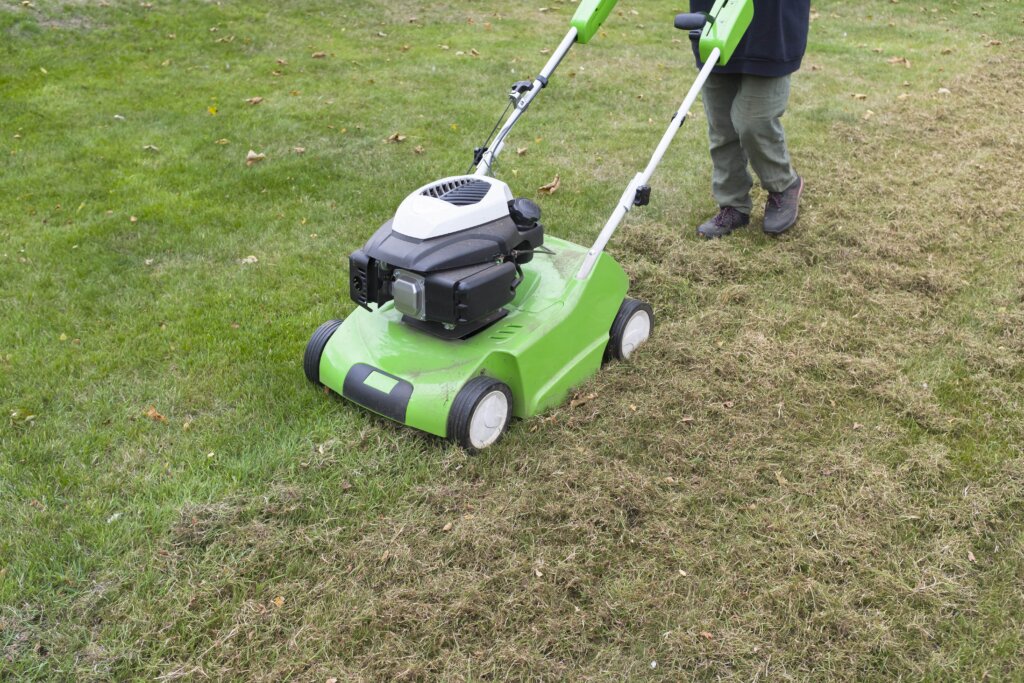
Dethatching is basically raking out all the dead organic matter that builds up between your soil surface and the green grass blades you actually want to see. A thin thatch (~¼ inch) is healthy; it protects roots and helps retain moisture.
But when that thatch layer gets thick? Water, air, and nutrients can’t get through to the root zone. Your grass starts yellowing, thinning out, and looking pathetic even though you’re doing everything right.
You’ll use a power rake for larger lawns, or if you’ve got a lawn tractor, you can grab a dethatcher attachment. For small lawns, manual tools work, but be ready for some serious back work. That brown, matted debris is way heavier than it looks when you start piling it up.
Best time to dethatch cool-season lawns in Pennsylvania? Early or late spring, when the grass recovers quickly.
Signs Your Lawn Needs Dethatching
Check for these warning signs:
- Thick thatch layer over half an inch (stick a screwdriver down and see what you’re dealing with)
- The lawn feels spongy when you walk across it
- Grass blades are yellowing, or the turf is thinning despite regular watering
- Water pools on the surface after rain instead of soaking in
- You’re seeing more weed growth than usual — weak, stressed grass tends to invite weeds
If you spot excessive thatch, your lawn can’t breathe. Too much thatch essentially suffocates what’s below.
Fact to watch: Turfgrass experts from the University of Massachusetts Amherst say that when the thatch layer exceeds ½-inch to ¾-inch, it begins blocking air, water, and nutrients from reaching the root zone, which seriously hampers grass health.
If that happens, it’s a clear signal to dethatch.
What Is Core Aeration?
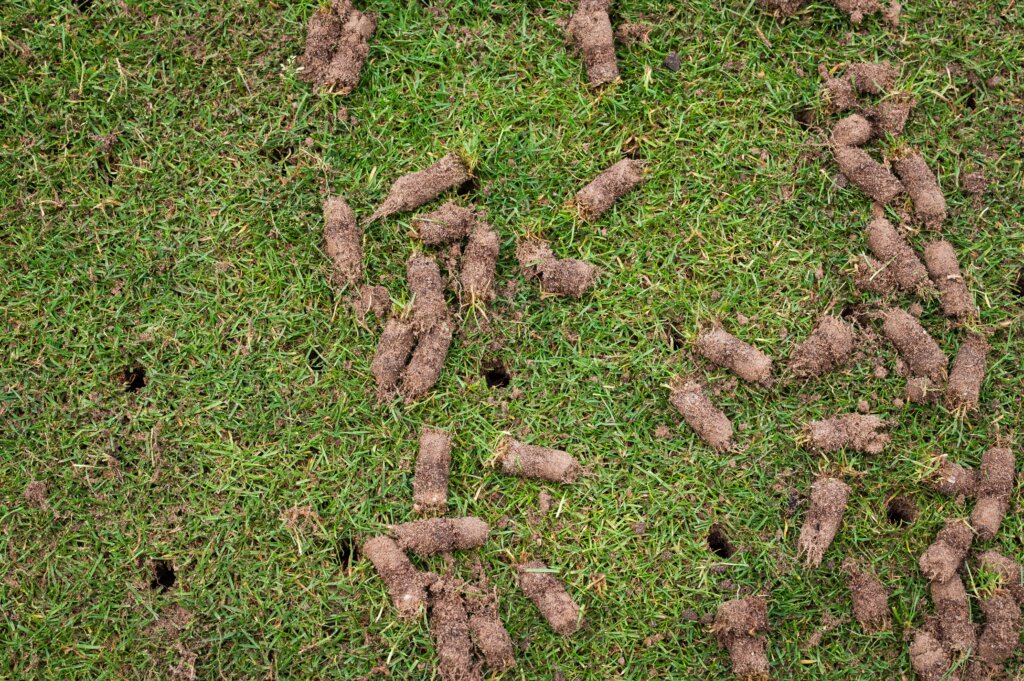
Core aeration—sometimes just called lawn aeration—pulls small plugs of soil right out of your lawn. Those little plugs break down over a few weeks and work back into the turf.
Why do this? Because compacted soil is like trying to grow grass on a parking lot. Grass roots can’t push down, water runs off instead of soaking in, and all those essential nutrients you’re paying for just sit on top doing nothing.
A core aerator uses hollow tines to yank out those plugs. You can rent one, but honestly, Pennsylvania clay is brutal. Spike aeration (just poking holes) doesn’t work nearly as well on heavy soil; it can actually make compaction worse by pressing soil even tighter. Liquid aeration is fine for maintenance on small lawns or sandy soil, but it’s not going to fix serious soil compaction.
Benefits of aeration:
- Promotes root growth by giving roots room to expand, a key benefit of lawn aeration for healthy, thriving turf
- Improves nutrient absorption
- Reduces water runoff on clay-heavy soil
- Strengthens overall lawn health and helps your grass handle heavy foot traffic
Signs Your Lawn Needs Aeration
You’ll know it’s time to aerate your lawn if:
- The soil feels hard and dense, like you’d need a pickaxe to break through
- Grass roots are shallow, and the turf tears up easily — a sign it’s time to aerate and keep your lawn healthy
- Water absorption is slow; puddles form quickly, even from light rain
- Grass stays thin despite proper lawn care, fertilization, and watering
- High-traffic areas are worn down and compacted from kids, dogs, or just regular use
If you’re in Montgomery County, Chester County, Collegeville, or anywhere around here with our famous clay soil, your lawn probably needs aeration more often than you think. That soil compaction is real.
Key Differences Between Dethatching and Aerating
Let’s break down dethatching vs aerating the lawn so you can see exactly what each one does:
What They Target
Dethatching works on the surface—that thick layer of dead grass, roots, and organic material sitting above the soil. Aeration goes deeper, targeting compacted soil and the root zone itself.
The Problem Each One Solves
Got a thatch problem? Dethatching removes excess thatch so air, water, and nutrients can reach the grass roots.
Dealing with poor drainage and shallow roots? Aeration tackles reduced soil compaction and opens up space for root growth.
Tools You’ll Use
For lawn dethatching, you need a power rake, dethatcher blades, or a riding mower attachment. For lawn aeration, you want a core aerator with hollow tines to pull actual plugs out, not just poke holes.
Long-Term Impact
Dethatching delivers instant surface improvement; your lawn breathes better right away. Aeration is the long game, strengthening roots so your grass survives Pennsylvania summers and cold snaps.
In areas like Bucks or Delaware County, many lawns need both: thatch on top, compacted soil underneath. Do them together, and the results are dramatic.
What’s Better for Pennsylvania Lawns?
Here’s the reality: Pennsylvania has clay-heavy soil, especially in Chester County, Berks County, and around Collegeville, PA. That means soil compaction is your enemy. Kids, pets, foot traffic… it all presses the soil down until roots can’t breathe.
Cool-season grasses like Kentucky bluegrass and fescue can create a layer of thatch, but most homeowners only see real thatch accumulation every few years.
When it comes to aeration vs dethatching, aeration usually wins here. Our soil just needs those small holes to open things up and keep grass health on track. If you’re reseeding, aeration also helps grass seed make better contact for stronger, healthier grass—especially as cooler temperatures roll in.
But don’t guess. Walk the yard. Feel it. If it’s spongy, dethatch. If it’s rock-hard, aerate. And if you’ve got both compaction and thatch? Combine aeration and overseeding along with dethatching, and you’ll see all the difference afterwards.
When Your Lawn Needs Both Services
Sometimes one treatment isn’t enough. Here’s when you need to combine them:
Why Dethatching Comes First
You want to strip away that thick thatch layer before you aerate. If you try to run a lawn aerator through excessive thatch, those hollow tines won’t penetrate deeper into the actual soil; they’ll just grab thatch and organic matter. Clear the surface first, then you can get to the real problem underneath.
Why Aeration Enhances Results Afterwards
Once you pull those small plugs out, air, water, and nutrients finally have a direct path down to the root zone. Your grass roots can spread, absorb nutrients better, and establish a stronger root system. The plugs break down naturally and add organic material back into the lawn.
Ideal Situations for Both
- Lawn has spongy patches from too much thatch AND hard, compacted soil
- Heavy foot traffic areas where kids or pets run constantly
- Grass looks terrible despite everything you’re doing—fertilizing, watering, the works
- You’re dealing with Pennsylvania clay soil that just refuses to cooperate
- Poor drainage and water runoff are both issues
Do both treatments right, and you’re setting up a healthy lawn for the long haul.
Why Professional Help Matters
DIY sounds tempting, but dethatching and aerating aren’t as simple as they look. Power rakes can scalp your turf in seconds, and most rental aerators barely scratch Pennsylvania clay, leaving shallow divots that do nothing for grass health.
Pros bring commercial-grade equipment and know when you truly need dethatching, core aeration, or both. Terra Lawn Care Specialists handles everything in-house, so you get consistent service and honest calls.
If your yard doesn’t have real thatch accumulation, we won’t push it. If aeration alone will give you healthy grass, that’s what you’ll get.
Dethatching vs aerating a lawn comes down to fixing two different issues. Dethatching clears excess debris and that layer of thatch, while aeration opens compacted soil so roots can breathe and grow. Together, they can make all the difference in getting truly healthy grass—especially for Pennsylvania homeowners dealing with clay soil and cool-season grasses.
The trick is knowing what your lawn actually needs. Compaction? Thatch accumulation? Or both? A quick walkthrough of your yard can tell you a lot, but if you’re unsure, Terra Lawn Care Specialists can take a look and point you in the right direction.
For a lawn that finally behaves the way it should, expert eyes help. Reach out anytime to Terra Lawn Care professionals.
Frequently Asked Questions About Dethatching vs Aerating lawn
It depends on what your yard is dealing with. If you’ve got a thick thatch layer or thatch buildup, dethatching helps clear the surface so air and water can reach the soil again.
If your ground feels hard, lawn aeration usually helps more because it relieves compaction and supports better root growth. Many homeowners end up needing both at some point, especially if they want a truly healthy lawn. lawn.
Push your fingers into the grass and check for a spongy feel underfoot or a thatch layer >½ inch. That’s a sign that the thatch is blocking water and nutrients.
You may also notice thinning grass, dry patches, or water running off instead of soaking in. If these show up, dethatching can help restore lawn health.
For cool‑season lawns in Pennsylvania, early fall — from late September through early October — is actually a very good time to dethatch. Cool soils and moderate weather help the turf recover before winter. If you miss that window, spring remains a safe second option, but fall should be considered a primary window rather than a fallback.
Many lawn‑care experts recommend early fall (mid‑September to mid‑October) as one of the best times for lawn aeration on cool‑season turf. Soil is often warm and moist, and roots are still active, so grass recovers quickly before the cold sets in. If you miss fall, early to mid‑spring is still a valid backup.