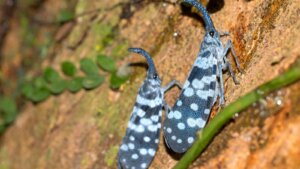
The spotted lanternfly is an aggressive pest that has caused a massive ecological crisis across Southeastern Pennsylvania since 2014. If your home is located within the local communities we protect, like Collegeville or Phoenixville, you know this bug attacks over 70 plant species. These include grape vines, red maple, silver maple, black walnut, and the invasive tree of heaven scattered across Montgomery County.
The bugs survive the freezing Pennsylvania winter entirely as eggs. These eggs hatch reliably every MAY. Early spring is your absolute last chance to locate and destroy them before the first instar nymphs (newly emerged young bugs) start to wreak havoc.
The bugs survive the freezing Pennsylvania winter entirely as eggs. These eggs hatch reliably every May. Early spring is your absolute last chance to locate and destroy them before the first instar nymphs (newly emerged young bugs) start to wreak havoc.
Finding these egg masses glued to your patio furniture is a hassle, but the smell of rubbing alcohol and crushed bugs is a small price to pay to save your summer outdoor spaces and daily walks.
Identifying the Invasive Species and Late Season Egg Clusters
A mature female lays one to two distinct clusters from September through November. Freshly laid spotted lanternfly (SLF) egg masses feature a white, putty-like protective coating. As this waxy coating cures through our cold PA winters, it shrinks and turns into a grayish-brown color. By March, the masses look exactly like a 1.5-inch smear of dried, cracked mud.
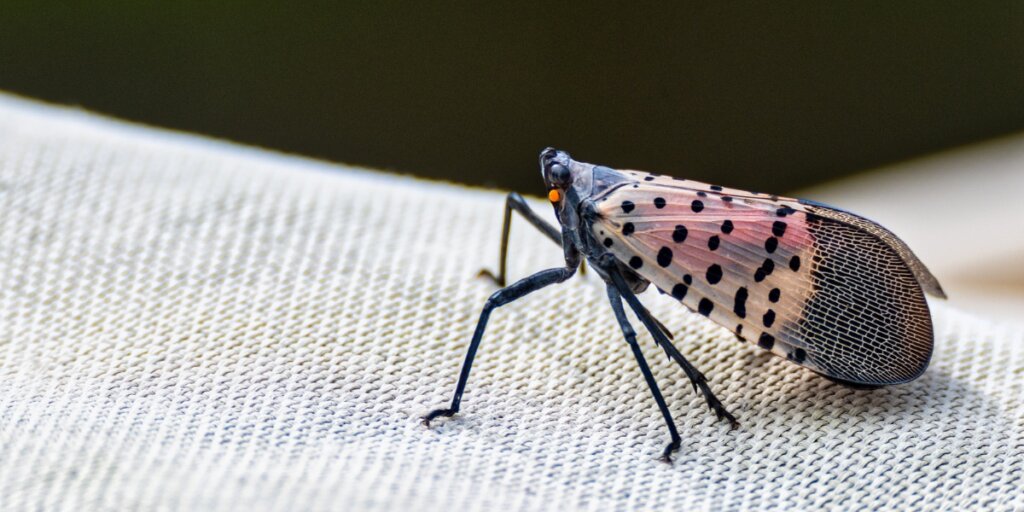
Each cluster contains between 30 and 50 individual eggs laid in vertical rows. The mass itself is the size of a large coin. Each tiny egg inside resembles a sharpened pencil point. If you spot perfectly oval holes at the top of the egg casings, the nymphs have already emerged.
Our lead pest management specialist, Pat, regularly finds them hidden behind gutters in Lansdale, under deck rails in Blue Bell, and inside vehicle wheel wells. Undisturbed bark mulch piles and bed-edge stones are just as common a hiding spot. Our spring mulching guide covers why turning and inspecting the existing mulch layer before adding anything new is a standard part of every Terra spring service.
If you find a spotted lanternfly in a new location, snap a clear photo. Report the sighting immediately to the state hotline at 1-888-4BAD-FLY (1-888-422-3359), operating Mon–Fri, 8 a.m.–5 p.m., or directly through the Pennsylvania Department of Agriculture online reporting portal. Alerting authorities helps stop their spread and protects your local community.
If you find a spotted lanternfly in a new location, snap a clear photo. Report the sighting immediately to the state hotline at 1-888-4BAD-FLY (1-888-422-3359), operating Monday through Friday from 8 a.m. to 5 p.m., or directly through the Pennsylvania Department of Agriculture online reporting portal. Alerting authorities helps stop their spread and protects your local community.
What this means for your home: You must keep a sharp eye on your outdoor gear. An average smear of light gray mud on your Pottstown property could actually be 50 bugs waiting to ruin your landscaping.
Penn State University and Department of Agriculture Advice for Properly Destroying Them
Because a single mass holds up to 50 gestating nymphs (developing bugs), every cluster you destroy reduces the summer feeding activity. Agricultural researchers note that simply knocking them onto the ground does not work. The bugs will still hatch and climb the nearest host plant. Before the warm weather arrives, you need to follow the scientifically backed scrape and squash method.
Start by filling a plastic bag or a container with an ovicidal agent (a substance that kills eggs) like rubbing alcohol or hand sanitizer. The alcohol destroys the cell walls of the developing bug to ensure rapid death.
Grab a rigid plastic card or a putty knife. Position the container directly underneath the target. Scrape the putty-like matrix off the surface and into the liquid with a forceful downward motion.
Property owners who try using soapy water or mineral oils find them far less effective than pure alcohol. Seal the container tightly and place it in your standard municipal trash. If alcohol is unavailable, you must crush the clusters directly against the bark. Apply forceful pressure until you hear a distinct popping sound and observe fluid coming out of the casings.
The Reality Check on Why Scraping Is Not Enough
While manual removal cleans up lower trunks, it biologically fails to prevent a summer invasion. Extensive canopy surveys from university researchers reveal a harsh truth. Nearly 98 percent of the SLF egg masses laid on mature plants sit high within the upper branches. They are entirely inaccessible from the ground, sitting well above 10 feet high.
Attempting to reach them creates severe safety risks. When the May hatch occurs, millions of nymphs will emerge. They feed heavily on phloem sap (the sugary fluid inside the plant).
The insects excrete a sticky waste product known as honeydew. Soon, your property will be covered in this sticky waste. When combined with Montgomery County’s humid summers, it promotes the rapid growth of black sooty mold. This mold damages understory plants, stains patios, and attracts aggressive swarms of stinging insects.
The Zylem Bark Band Solution
If you need a reliable spotted lanternfly treatment that PA homeowners can trust, our Zylem bark band solution is the answer. To combat the bugs hiding in the upper branches, commercial applicators rely on advanced systemic insect management strategies using chemicals that treat the plant from the inside out.
Since 2003, Terra Lawn Care Specialists has used an Integrated Pest Management (IPM) approach. Backed by 15+ years of in-house golf-course agronomy experience, our state-certified technicians do not believe in blanket spraying. Instead, we use a precise bark band spray using the active ingredient dinotefuran, given under the commercial formulation Zylam or Zylem.
The Zylem Bark Band Solution
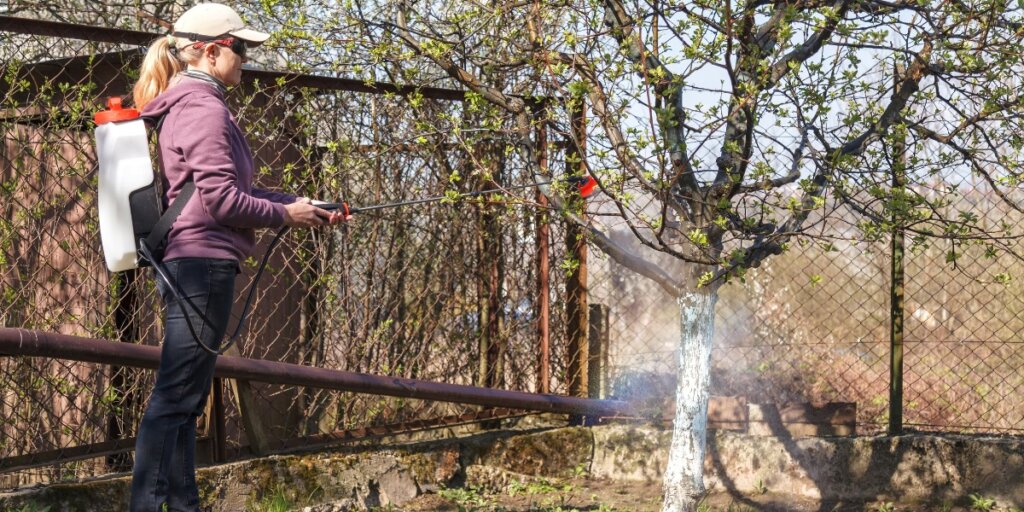
If you need a reliable spotted lanternfly treatment that PA homeowners can trust, our Zylem bark band solution is the answer. To combat the bugs hiding in the upper branches, commercial applicators rely on advanced systemic insect management strategies using chemicals that treat the plant from the inside out.
Since 2003, Terra Lawn Care Specialists has used an Integrated Pest Management (IPM) approach. Backed by 15+ years of in-house golf-course agronomy experience, our state-certified technicians do not believe in blanket spraying. Instead, we use a precise bark band spray using the active ingredient dinotefuran, given under the commercial formulation Zylam or Zylem.
Dinotefuran targets the central nervous system of the insect. It leads to rapid paralysis and death. Unlike broad-spectrum contact sprays, this systemic solution is absorbed directly into the living tissue. The chemical is drawn into the xylem (the tissue that moves water upward). The plant transports the treatment vertically throughout the entire canopy. When the unreachable spotted lanternflies pierce the bark to feed, they ingest a lethal dose.
| Application Method | Delivery Mechanism | Primary Advantages | Critical Limitations |
|---|---|---|---|
|
Zylem Bark Band Spray
Terra Pick
|
Systemic upward transport via xylem. | Highly precise targeting treats 100 percent of the upper canopy and avoids spray drift. | Must be applied to actively growing trees. |
| Soil Drench | Liquid is applied to the root zone. | Root absorption. | High risk of groundwater contamination and slow uptake. |
| Contact Foliar Sprays | High-pressure spray directly on leaves. | Immediate knockdown of visible bugs. | Poor residual longevity and extreme drift risk make it highly toxic to native insects. |
| Trunk Injection | Drilling directly into the tree trunk. | Zero environmental drift. | Causes permanent physical wounding to the tree. |
Terra Lawn Care Specialists Timeline
A single trunk application of Zylem provides active protection for exactly 60 days. Spotted lanternflies feed actively from May until November. Because of this long feeding window, one treatment is biologically insufficient. Terra Lawn Care Specialists engineered a two-part strategy designed specifically for the Pennsylvania pest calendar, because we treat your property as if it were our own.
First Application for Early June Nymph Knockdown
By early June, the overwintering eggs have hatched. The nymphs are feeding heavily on tender new growth. Applying the first bark band uses the peak water movement of the plant to accelerate chemical uptake. This eliminates the bugs early, definitively stopping the initial waves of honeydew. Scheduling this application post-bloom heavily protects local populations of bees from chemical exposure.
Second Application for Early August Adult Interception
Late July and August mark the emergence of the highly mobile winged adults. They aggressively fly and migrate from neighboring untreated properties directly into your canopy to feed. The second application in early August re-saturates the vascular tissue (the internal plumbing system of the plant). Any adult attempting to feed is rapidly neutralized. This completely breaks the reproductive cycle before the female lays her eggs in October or November.
Francisco did an excellent job spraying our yard for bugs, ticks and [fleas]. I like the fact that he tells me exactly what he will be doing as a preventative measure to the grounds. I want Francisco assigned to do our yard every quarter.
Scraping eggs is only the first step. For total property protection and the most effective spotted lanternfly control Montgomery County has to offer, trust our targeted 60-day systemic treatments. Serving the surrounding communities, reach out to our professional applicators at +1 610-275-2170 to book your June application today, or request a free estimate for spotted lanternfly control to get started.