
Most lawn problems don’t start with the fertilizer bag. They start in the soil. Yellowing turf, thin growth, and brown patches on lawns in summer often point to imbalanced nutrient levels or incorrect soil pH. Soil testing confirms the cause before you apply fertilizer.
The Food and Agriculture Organization reports that about 33% of the world’s soils are degraded, meaning many soils can’t supply nutrients effectively. While that figure reflects global conditions, the same principle applies to home lawns; poor soil health limits how well grass can use water and nutrients.
For homeowners planning seasonal treatments or trying to understand why past applications failed, soil testing for grass should be the first step of routine yard maintenance in Collegeville.
What a Soil Test Reveals
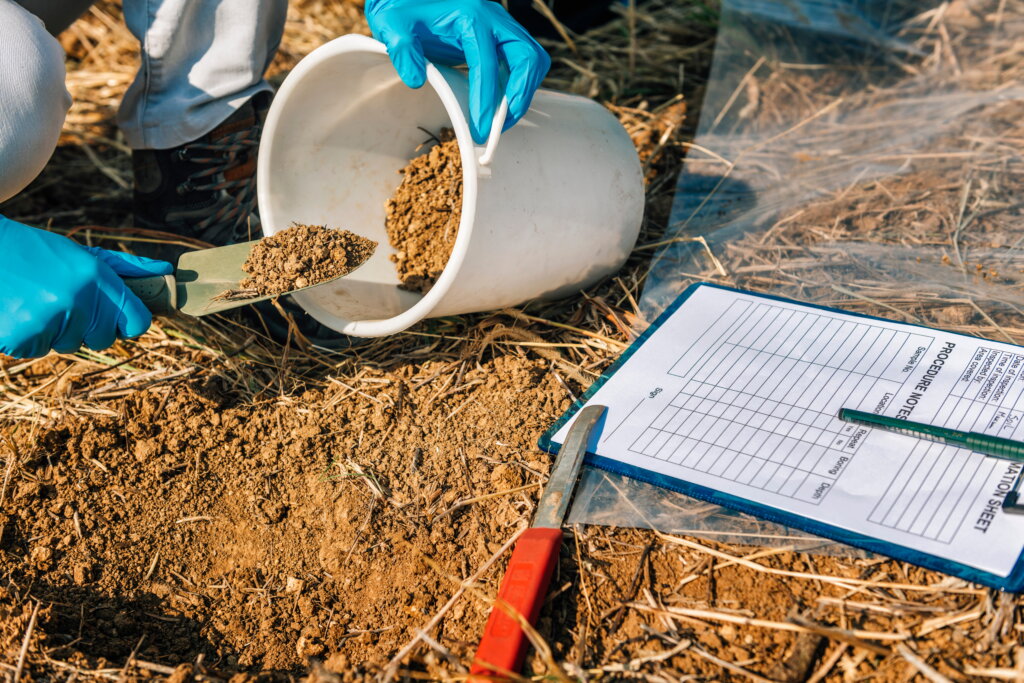
A professional soil test provides an estimate of plant-available nutrients and how well your turfgrass can access them. The soil test report covers soil pH, phosphorus and potassium levels, calcium and magnesium content, organic matter percentage, micronutrients like iron, zinc, manganese, and copper, and cation exchange capacity (CEC). In some cases, the report also flags salinity concerns that limit root function.
The report identifies nutrient deficiencies, excess nutrients, and imbalances that affect turf health. Nitrogen isn’t reliably measured because it moves quickly through the soil, but the results still help determine what else is missing and where adjustments are needed.
Why Soil Testing Matters for Lawns
Without a soil test, fertilizer applications miss the real issue, which is why any reputable lawn care company in Collegeville starts with a thorough analysis.
A lawn with low phosphorus won’t improve from nitrogen-heavy products. A lawn with high alkalinity may show deficiency symptoms even when nutrients are present, because roots can’t absorb them at the wrong pH.
Soil testing prevents that kind of wasted effort. It helps correct actual deficiencies, avoid over-fertilization, reduce unnecessary costs, and improve turfgrass density and color. It also protects the environment by minimizing nutrient runoff into local waterways.
Testing every 3 to 5 years keeps soil fertility balanced and supports long-term lawn health. Maintaining a strong, thick turf is crucial if you are figuring out how to get rid of onion grass in Collegeville and preventing aggressive weeds from returning.
How Soil Conditions Affect Lawn Performance
Soil pH and Nutrient Availability
Soil pH measures how acidic or alkaline the soil is. A reading of 7.0 is neutral, below 7.0 is acidic, and above 7.0 is alkaline. Most plant nutrients are available at their best levels between pH 6.0 and 7.0. Outside that range, phosphorus, potassium, and micronutrients become harder for turfgrass to absorb.
A soil test identifies whether to add lime to raise pH or sulfur to lower it. For a closer look at target ranges for different grass types, see what the ideal soil pH level is for grass.
Macronutrients and Turf Strength
Phosphorus supports root development. Potassium improves drought tolerance and stress resistance. Calcium and magnesium support cell structure and soil balance. Deficiencies are more common in sandy, clay, or acidic soils, and potassium is especially important for turfgrass under heat, traffic, or drought stress.
Micronutrients and Turf Color
Trace elements like iron and manganese play a direct role in turf color. Soil testing identifies hidden shortages that cause pale or uneven lawns. If your turf shows discoloration that doesn’t respond to fertilizer, a soil report can identify the specific micronutrient shortage. For more on how deficiencies affect lawn health, see our guide to nutrient deficiencies in lawns.
Organic Matter and Soil Structure
Organic matter improves water retention, nutrient-holding capacity, and soil structure. Leaving grass clippings on the lawn and mulching fall leaves back into the turf increases organic matter naturally, reducing the need for frequent fertilizer applications. Applying humic acid and its impact on lawn health in Collegeville is another way to support these soil-building processes.
When to Test Lawn Soil
You can collect soil samples most of the year as long as the ground isn’t frozen, but fall is the best time. Testing in the fall allows time to apply lime or soil amendments before spring. As temperatures drop, homeowners often ask when is it too cold to water a lawn in Collegeville to avoid turf damage.
Testing is especially useful when establishing a new lawn, planning a fertilization program, or preparing for lawn aeration and overseeding. Avoid taking samples during extreme drought or saturated conditions, as those distort soil test results. Also, avoid collecting near driveways or low-lying wet spots, as these areas can skew your results.
Professional vs. DIY Soil Testing
A basic soil test kit can give you a rough pH reading, but it lacks the detail needed to build a fertilization plan. DIY kits don’t measure full nutrient levels, CEC, or organic matter, which are critical factors to understand before putting grass seed on top of soil in Collegeville.
Professional soil testing uses laboratory analysis and delivers a complete soil report with nutrient quantities, pH recommendations, and lime and fertilizer rates. For lawn care decisions based on real data, professional testing provides the detail that DIY options can’t match. This accurate soil data is crucial before following guides like How to Reseed Lawn in Fall (Step-by-Step Guide for a Healthier Yard) in Collegeville.
How Soil Testing Guides Fertilization
Fertilizer should match the soil’s actual needs, not follow a generic schedule.
A soil test identifies which nutrients are sufficient, which are deficient, what ratios to apply, and how much product to use. Each test report includes recommended quantities that support healthy turf without overapplication while reducing nutrient runoff.
It also helps time applications correctly. For example, potassium may be recommended ahead of stress periods, while phosphorus is applied when root development is the priority. That data is what makes a professional lawn fertilization program effective; every application is guided by what the soil actually needs.
Soil Testing and Lawn Services
Soil testing connects directly to every other turf care practice. Aeration addresses compaction, but without proper nutrient levels, recovery stalls. Fertilization encourages growth, but only when soil pH and nutrient balance are right, which is why we emphasize soil health in our Can I Just Throw Grass Seed Down on Existing Lawn? 2025 Expert Guide in Collegeville.
Visit our lawn care page to see how soil analysis supports aeration, fertilization, and long-term improvement.
Frequently Asked Questions
Healthy soil supports steady growth, strong roots, and consistent color. If your lawn greens up evenly after watering and mowing, the soil is likely in good shape. Thin areas, patchy growth, or yellowing often point to imbalanced nutrient levels or incorrect pH. A soil test for lawn health confirms the cause by showing whether phosphorus, potassium, calcium, and magnesium are at the right levels.
The most reliable option is to request professional service through a soil testing contact form or a local provider. They handle the full process, from collecting a representative soil sample to sending it to a certified lab. The soil test report includes nutrient levels, pH readings, and recommended rates for phosphate, potash, lime, or other inputs. If you prefer independent testing, a local cooperative extension office can also analyze your sample and provide guidance.
Fall is the best season because it gives time to apply lime or amendments before spring. Test when planning major lawn improvements, after heavy manure application, or when problems don’t respond to fertilizer. Periodic testing every few years keeps soil conditions balanced.