
When homeowners look up nutrient deficiencies in plants, they’re usually staring at a lawn that doesn’t look right. The grass may be turning pale green, thinning out, or refusing to bounce back after mowing. When turf is slow to establish, homeowners often wonder how long does it take for grass seed to grow under poor soil conditions.
These problems get blamed on fertilizer more often than not, but nutrient deficiencies in lawns are rarely that simple. Many deficiency symptoms overlap, making it difficult for homeowners learning how to grow grass from seed to identify why new turf is struggling.
Yellowing grass could point to nitrogen, iron, soil compaction, or pH problems. The nutrients themselves matter, but the soil conditions underneath matter just as much for effective lawn fertilization in Montgomery County.
Common Nutrient Deficiencies in Lawns
Lawns develop deficiencies even when fertilizer goes down on schedule. It’s one of the most common plant nutrient deficiency patterns in turfgrass. For nutrients to support healthy growth, they have to be both present and accessible at the root zone, a key consideration when deciding when to plant grass seed in spring for a greener lawn.
Problems show up when soil conditions block uptake. Unbalanced pH levels, compacted soil, low organic matter, and excessive irrigation all limit what plant roots actually absorb. A required nutrient might sit in the soil without ever reaching the turf, leading to reduced growth, thinning, and visible symptoms of stress. Proper moisture management is vital, so see our guide on How Long Should You Water New Grass Seed? A Seed-to-Sprout Watering Guide.
Visual Symptoms of Nutrient Deficiencies
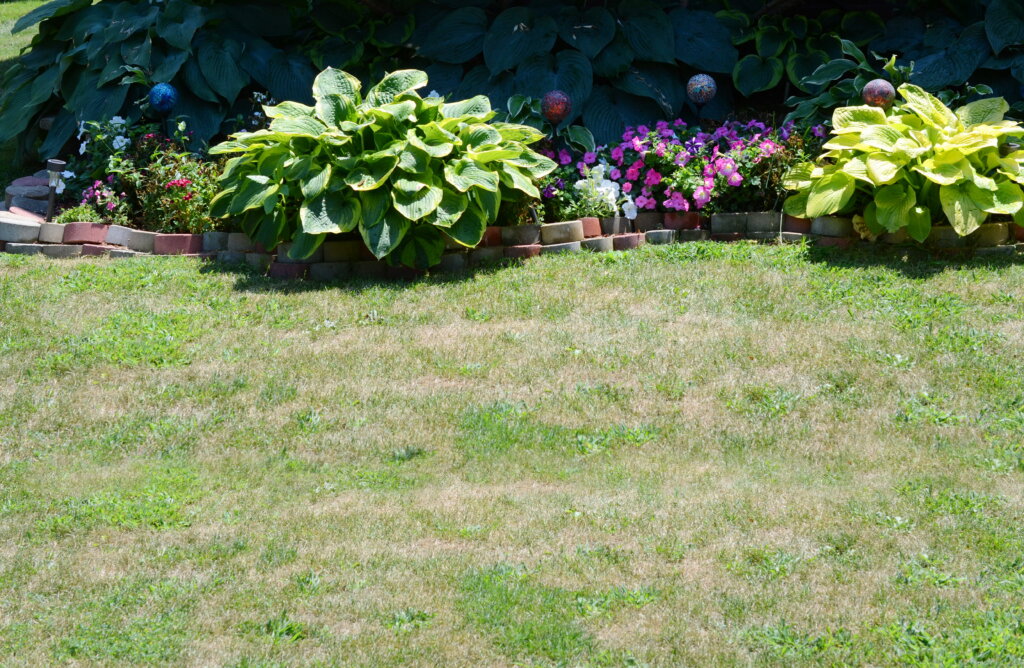
Most lawn nutrient issues build gradually and spread unevenly across the yard. General chlorosis turns grass yellow or pale green across broad areas. You might also notice thinning turf, stunted growth after mowing, delayed recovery from heat or foot traffic, and uneven patches where dark green sections sit next to faded ones.
These visual symptoms affect the entire leaf or start along leaf edges, depending on which nutrient is involved. Because so many plant symptoms overlap, appearance alone can be misleading. Dark green coloration beside pale grass usually reflects soil variability rather than a fertilizer gap.
Mobile Nutrients and Immobile Nutrients
Some nutrients move freely within grass plants. Others stay locked in place once deposited. When a mobile nutrient runs short, symptoms tend to appear first on older, mature leaves because the plant pulls those resources toward newer growth. With immobile nutrients, the damage shows on younger leaves instead. Recognizing where symptoms appear helps narrow the possibilities, but it won’t confirm a diagnosis on its own.
Lawn Nutrient Deficiencies
Nitrogen Deficiency
Nitrogen drives color and steady plant growth in turf. Deficiency starts as pale green grass that turns yellow, beginning on the lower leaves. According to Penn State Extension, nitrogen deficiency results in yellow-green color, thinning, and increased susceptibility to disease.
Potassium Deficiency
Potassium supports stress tolerance and turf strength. Without enough, lawns show weak growth, poor recovery from heat or wear, and yellowing at the tips and edges of older leaves that can progress to browning or scorch marks along the leaf margins.
Phosphorus Deficiency
Phosphorus fuels root growth and early turf establishment. Less common in mature lawns, deficiencies appear as dark green turf that develops a purple or reddish discoloration, along with slow growth and delayed maturity in compacted soils or cool weather. Applying a phosphorus fertilizer often corrects this issue during early growth stages.
Magnesium Deficiency
Magnesium deficiency shows up as interveinal chlorosis on older leaves. The tissue between the veins turns yellow while the veins stay darker. Symptoms often spread unevenly and create patchy color across the lawn.
Iron Deficiency
Iron deficiency also causes interveinal chlorosis, but it targets younger leaves. Grass takes on a pale yellow look with dark green veins. This problem ties directly to high soil pH, which locks iron out of reach even when levels test adequate. Iron chlorosis is most common in soils with a pH above 7.0.
Calcium Deficiency
Calcium supports cell structure and root development. In turfgrass, deficiency usually traces back to acid soil, poor soil structure, or restricted root growth rather than a true calcium shortage.
Why Nutrient Deficiencies Happen in Lawns
Lawn nutrient problems rarely come from one source. Both acidic soils and high soil pH block nutrient uptake, even when those nutrients are physically present. Soil compaction is another frequent issue, choking off air, water, and root growth in ways that mimic deficiency symptoms perfectly.
Low organic matter weakens the soil’s ability to hold and release nutrients. Excessive irrigation pushes nutrients below the root zone. Environmental stress from heat, drought, or heavy traffic limits what plant roots absorb. These conditions explain why lawns decline even with consistent fertilization.
Why Fertilizer Alone Doesn’t Always Work
Adding fertilizer without knowing the cause usually leads to disappointment. Many nutrient deficiencies produce similar symptoms, and non-nutrient issues like compaction or pH imbalance look identical to nutrient stress.
Soil pH locks nutrients into forms turfgrass can’t absorb. Compaction physically prevents plant roots from reaching what’s available. Repeated fertilization in those situations might produce a short burst of deep green followed by the same pale patches weeks later.
The Role of Soil Testing
Soil testing takes the guessing out of lawn care. A proper test measures nutrient levels, soil pH, and the conditions that affect availability. With that data, homeowners can tell whether their symptoms come from true nutrient deficiencies, a pH imbalance, or a structural soil problem. Regular soil testing also tracks changes season to season, helping prevent the same issues from cycling back.
Putting It Together
Most lawn problems look the same from the surface. Yellowing grass, thinning turf, and stunted growth all signal stress, but they don’t point to the same fix. If thinning turf leaves bare spots, knowing how to spread grass seed properly helps restore density once the soil is corrected.
Understanding how nutrient deficiencies show up in lawns means looking past fertilizer and focusing on the soil. When diagnosis comes before treatment, every decision gets easier. Soil testing isn’t an extra step. It’s the smart first one. Correcting these deficiencies ensures that when you repair thin areas, you won’t be left asking, “How long does it take for grass seed to germinate and grow?”
Frequently Asked Questions About Nutrient Deficiencies Plants
Most plants need the same core elements, but symptoms vary depending on what you’re growing. In lawns, nitrogen deficiency is the most frequent issue. Iron deficiency also shows up regularly, especially where soil pH runs high. Magnesium and potassium deficiencies are less common but still occur, particularly in sandy soils or lawns that receive heavy rainfall.
The seven that come up most in plant nutrition are nitrogen, phosphorus, potassium, magnesium, calcium, iron, and sulfur. In lawns, nitrogen shows as yellowing on the lower leaves first. Potassium produces tip burns or browning at leaf edges. Calcium, magnesium, iron, and phosphorus each carry distinct signs that affect plant growth in different ways, though overlapping symptoms make lab confirmation important.
Start with a visual inspection, but don’t rely on it alone. Toxicity symptoms from overapplication mimic deficiency, so what you see isn’t always what’s wrong. Persistent yellowing and poor recovery after mowing are common warning signs. A professional soil test is the only reliable way to confirm which nutrients are lacking and whether soil pH or environmental conditions are contributing.