Sod buys you what’s basically an instant lawn: a finished, green lawn in a day, at a higher price and with fewer grass types to choose from. Seed costs less and gives you more control over what grows, but it needs a planting window and consistent watering before it looks like anything.
For most established Collegeville-area lawns going into fall, seeding is still the right call, and that’s the approach Terra’s lawn care library covers at length. Sod earns its place in a narrower set of situations: bare ground after construction, slopes losing soil, or a lawn that grubs or drought wiped out.
Collegeville’s local climate narrows the best seeding window for this area further, which is part of why sod versus seed plays out differently here than in a milder or hotter region. The table below breaks down where each one wins.
Sod vs seed at a glance
| Factor | Sod | Seed |
|---|---|---|
| Establishment time | Rooted in place within about four weeks; ground cover from day one | Weeks to germinate, then a full growing season to fill in and mature |
| Cost profile | Higher material and labor costs, driven by delivery and skilled installation | Lower material cost, especially for large areas |
| Best planting window | Nearly any time soil isn’t frozen, with spring, late summer, and fall as the strongest windows | Late summer into early fall for cool-season grasses in southeastern Pennsylvania |
| Risk on slopes or bare ground | Stabilizes soil and resists washout almost immediately | Exposed longer to erosion and rain until roots take hold |
| Best site fit | Small to mid-sized areas and erosion-prone spots | Established lawns and situations calling for a specific seed blend |
When sod is the right call
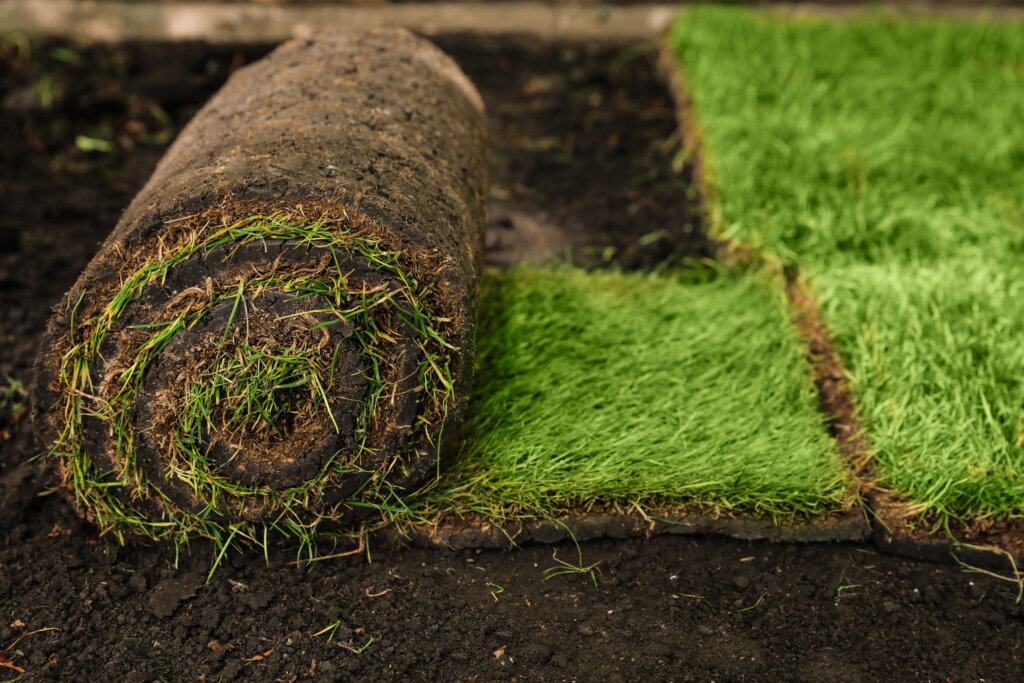
Sod makes the most sense on bare ground, where there’s no existing grass to build on. This shows up constantly in Chester and Montgomery County yards sitting on the region’s clay-heavy subsoil. After construction or hardscape work, the clay compacts hard and drains slowly. Planting grass seed struggles to get a foothold in it before soil erosion carries the seed away. Sod skips that vulnerable window because it arrives already rooted in its own soil layer, so it holds the ground and keeps dirt in place from the moment it’s laid down.
Slopes carry the same logic. Bare or newly seeded soil on a grade sheds water fast, and a heavy rain before germination can carry both soil and seed downhill, leaving muddy messes behind. A layer of fresh sod gives immediate erosion control on that slope, holding soil in place well before seed would have roots to do the same job.
A lawn that’s lost most of its cover to grubs or a hard drought is past the point where overseeding alone will fix it. Figuring out what actually killed the grass determines whether a lighter repair could still work or whether the root zone is too far gone. A heavy grub infestation can leave the turf spongy enough to roll back like a loose carpet, a clear sign the damage has reached the established root system.
A hard deadline changes the calculation too. If the lawn needs curb appeal for a home sale or a rental turnover on a specific date, sod is the only option that can get there, since seeding simply takes too long. A household with dogs and young kids can’t realistically keep even light foot traffic off a newly seeded lawn for the weeks it needs to establish. Sod tolerates light traffic much sooner, which makes it the more realistic choice for a yard already in daily use.
When seeding is still the better decision
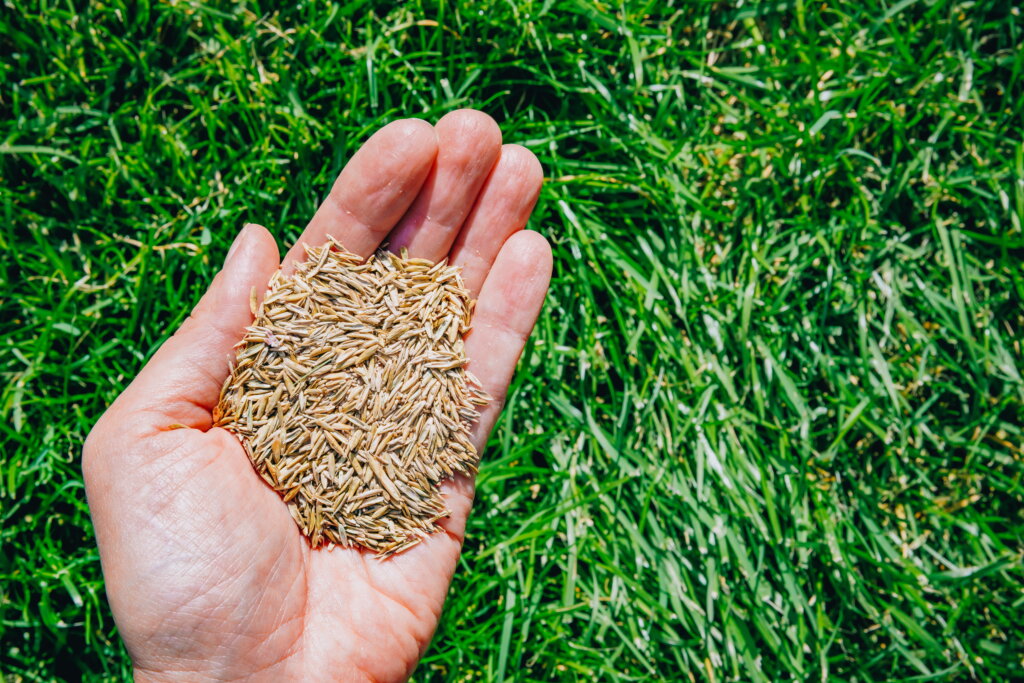
If you’ve ever stood over a spreader in the last light of a September evening, you already know seeding rewards patience more than speed. For an established lawn that’s simply thin or patchy, seeding is the better call. Existing grass still has an established root system, and overseeding builds on that instead of replacing it. Terra’s guide to overseeding done properly covers that process step by step. Overseeding vs sod isn’t a close call for a lawn in this condition: overseeding wins because it works with roots that already exist instead of starting over.
Fall is when this really pays off. Terra’s fall overseeding timeline lines up with when Collegeville’s cool-season grasses are naturally primed for mature, deeper roots, which is why seeding beats sod for an established lawn heading into autumn.
Seeding also opens up options sod doesn’t. A specific grass blend can be chosen for shaded areas or drought resistance, or matched to the exact look you want, while sod limits you to whatever varieties the local sod farms are growing that season. Over a few seasons, a seeded lawn builds stronger root systems and more resilience than sod still adjusting to unfamiliar soil.
When can you install sod in Pennsylvania?
You can lay sod almost any time the ground isn’t frozen, which gives it far more scheduling flexibility than seed. Penn State Extension’s guidance on lawn establishment lists spring, late summer, and fall as the strongest windows for cool-season sod in this region, since the soil holds moisture better and the sod isn’t fighting summer heat while it roots in. Summer plantings for either method run into the same trouble: the heat, drought stress, and disease pressure of a Pennsylvania summer make it a harder season for new turf to establish.
Seeding is more particular, and dialing in the right calendar window matters more for seed than it does for sod. Cool-season grasses in southeastern Pennsylvania establish best in late summer into early fall, when warm soil speeds germination and the cooler weeks ahead give new grass two full growing seasons, fall and the following spring, before summer heat tests it.
What does sod installation actually involve
Most sod installations start with a soil assessment and grading, since sod laid over poor soil conditions will struggle no matter how fresh it is. Terra’s agronomist, who spent 15 years managing turf on golf courses before joining the team, treats that soil check as the step that decides whether everything laid on top of it actually holds up. Because it’s grown weed-free at the nursery, newly installed sod also skips the flush of windblown weed seeds that colonize bare, freshly tilled soil.
Whichever method you choose, the first four to eight weeks after installation are what determine whether a new lawn survives, covering everything from watering to that first careful mow, according to Penn State Extension. More lawns fail from what happens in that stretch than from any other part of the process.
How long does sod’s root system take to establish?
New sod roots into the soil within about four weeks under good conditions, according to Penn State Extension’s guidance on root establishment, though that timeline shifts with weather and how well the site was prepared. During that window, sod needs consistent watering to keep the shallow new roots from drying out, and careful monitoring for dry patches matters as much as the schedule itself. Foot traffic should stay light until it roots properly. This is also why a rushed DIY job fails: poor rooting almost always traces back to skipped grading or soil-contact steps at installation.
What drives the cost of sod installation
Sod installation costs more than seeding a comparable area, and a few key factors determine that gap. Area is the biggest one: a small patch is quick and affordable to sod, while a full-yard job scales up fast once you’re paying for pallets and a crew’s time. Site access is worth factoring in too, since sod delivered to a backyard with no truck access takes more labor to move into place than a driveway-adjacent front lawn. Because professional installation is labor-intensive, existing lawn removal and grading both add time before a single roll goes down, and poor soil conditions or slope work can extend prep further.
For an accurate number based on your outdoor space, Terra’s sod installation and renovation page is the place to request a quote, since these variables shift enough from property to property that a generic estimate wouldn’t be useful anyway.
What about artificial turf?
If foot traffic or ongoing maintenance is the real concern, many homeowners weigh artificial turf as a third option beyond sod or seed. Terra’s breakdown of artificial turf’s pros and cons covers that option in more depth than fits here.
Getting a sod installation quote
Choosing between sod and seed comes down to your lawn’s immediate needs: bare, eroded soil requires instant sod stabilization, while thin turf simply needs targeted overseeding. If your property fits the criteria for sod, timing is critical before seasonal planting windows close in Collegeville and across Montgomery and Chester Counties. Contact Terra’s sod installation and renovation team today to schedule an on-site soil and turf assessment and get an accurate, field-verified quote tailored to your property’s exact conditions.
I can’t say enough about the fantastic job Terra did on our property. From taking out a tree in the back yard and regrading the lawn to building a great new wall around our front garden. They worked tirelessly all day! We would recommend Terra for any landscaping work you may have.