It’s late March in Collegeville. Forsythia is blooming. Last year’s mulch looks faded and matted, and your neighbor’s beds look finished while yours do not. The mulch already in your beds is part of the calculation. Measure what is there before adding anything new.
What Spring Mulching Does for Soil Health and Erosion Control
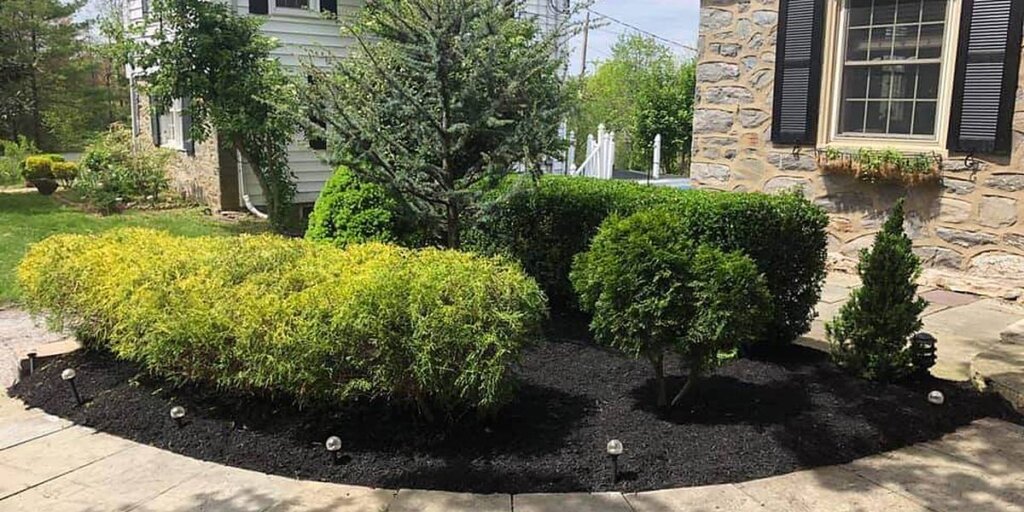
Mulch and compost serve different purposes. Compost gets worked into the ground to improve drainage. Organic mulch acts as a protective surface layer, slowing moisture evaporation and preventing soil erosion during heavy rains.
As it breaks down, organic mulch adds valuable nutrients back into the clay soil common across the Tri-State region, supporting a healthy garden through the full growing season.
Most established flower beds in Collegeville, Pottstown, and Doylestown already carry 1 to 3 inches of last year’s material. Terra Lawn Care’s target is 2 to 3 inches total across all ornamental beds. That figure covers what is already in place combined with what gets added this spring.
Terra has been walking these beds since 2003. The team’s in-house agronomist, with 15 years of golf course turf management experience, sets the installation standard for every spring job.
When to Apply Mulch to Your Garden Beds in PA, NJ, and DE
The spring window runs from late March through mid-May. Mid to late April is the sweet spot, after spring bulbs push up but before weed growth gets active. Most of the Tri-State falls in USDA Hardiness Zones 6b and 7a, with last-frost dates from April 15 near Philadelphia to early May in the Berks County highlands.
Soil temperature at 4 inches deep needs to reach 50 to 55 degrees Fahrenheit. Below that, mulch locks in cold ground and delays bloom time. Do not mulch over beds that are still waterlogged or partially frozen. PA’s clay-loam soils drain slowly after a wet March, and sealing in that moisture damages crowns and bark.
Use forsythia as your timing signal. When it drops its petals, crabgrass germination is imminent, and a pre-emergent needs to go on bare soil first. Apply fresh mulch a few days after, once the pre-emergent has had contact time with the ground.
What Happens When You Mulch Before the Soil Is Ready?
Late-season frosts in that same window have caught azaleas and rhododendrons across Chester and Montgomery Counties in recent springs. Mulching foundation beds before the frost window closes is active root protection that goes beyond curb appeal. Wait for forsythia to drop its petals and confirm your soil temperature before starting.
The Benefits of Organic Mulch Beyond Curb Appeal
The finished look is what homeowners notice first. The part that keeps your plants green and healthy through a PA summer is what most people never see.
Moisture retention. Penn State Extension confirms that mulch retards soil-water evaporation and conserves moisture through the droughty stretches of the growing season. In the Tri-State, where summers swing between three-week droughts and sudden afternoon downpours, that buffer keeps shallow-rooted shrubs from stressing between waterings.
Weed suppression. The same Penn State research notes that where mulch is applied at sufficient depth, few weeds will germinate. The PA weeds it holds back most reliably include crabgrass, hairy bittercress, henbit, chickweed, and garlic mustard, all aggressive by mid-April across Montgomery and Bucks Counties.
Temperature regulation. Mulch enhances temperature stability at the root zone, keeping roots cooler through July and August and buffering the wide swings of a PA April, when nights drop near freezing and afternoons hit 65 degrees.
Slow nutrient release. As organic mulch decomposes, it feeds the clay-loam soils of the Tri-State gradually. Established beds across Wayne and Newtown Square show measurably improved soil structure after three or four seasons of consistent organic mulch.
Preventing soil erosion. A well-mulched bed anchors soil against the heavy spring rains common along the Schuylkill watershed and on the sloped lots that define southern Chester County.
Soil health and biology. The moist, dark zone beneath the surface is where earthworms and beneficial microbes thrive. Active soil biology breaks down organic matter faster and improves aeration, particularly valuable in the dense clay soils that run through most of Montgomery and Delaware Counties.
Proper Depth: How Much Mulch Suppresses Weed Growth
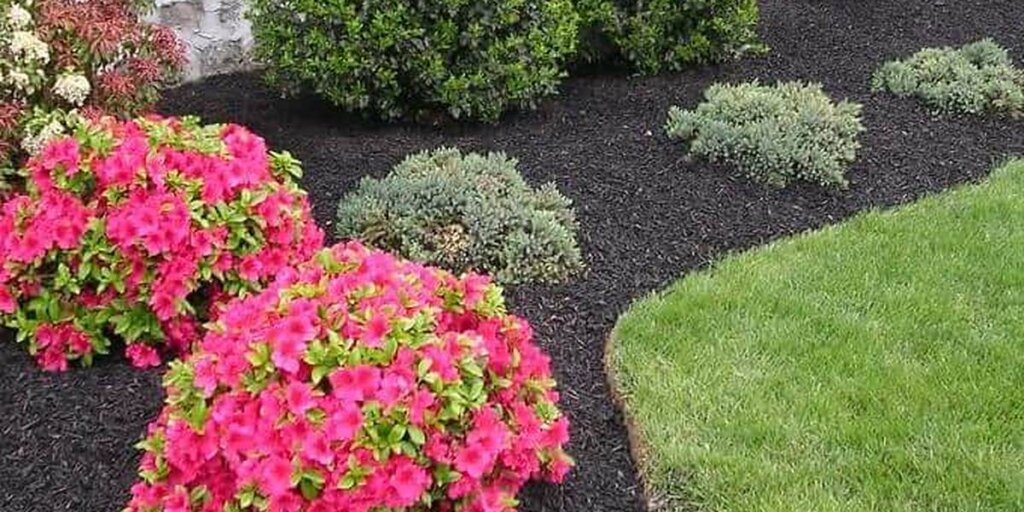
At 2 to 3 inches of total depth, the layer blocks sunlight from weed seeds and locks in moisture. Thinner than 2 inches, weed suppression fails. Past 3 inches, too much moisture gets trapped at the surface, and water beads off rather than penetrating, cutting off oxygen to plant roots below.
Beds with 4 or more inches need material removed before anything new goes down.
When mulch piles up in a cone against a tree trunk, bark stays chronically wet. That excess moisture causes fungal rot. Roots also begin circling back and slowly tightening around the trunk. Terra technicians see mulch volcanoes on roughly 7 out of 10 first-time property visits in Montgomery and Chester Counties. Maples and cherry trees on suburban PA streets are the most frequent victims, along with established dogwoods. Five to ten years of material piled against the trunk causes bark rot and girdling roots, leading to slow decline that often goes unnoticed until significant damage has occurred.
Keep mulch 3 to 4 inches away from trunks to prevent rot and protect the root flare, where the trunk widens before entering the ground. If the flare has been buried for several years, Terra’s tree and shrub program can assess whether the damage needs professional attention before the spring layer goes down.
What this means for your home: If your maple or dogwood has a cone of mulch at its base, pull it back before adding anything new. That one correction adds years to the tree’s life.
How Deep Should Spring Mulch Be in Pennsylvania?
Two to 3 inches total, counting what is already in the bed. If the existing layer reads 2 inches, a half-inch top-off is right. At 4 or more inches, start by pulling material out before adding a new layer.
The Step Most Gardeners Skip Before Spreading Mulch
Push a screwdriver into the existing mulch. If you are already at 2.5 inches, a light top-off is all you need.
Then test for compaction by pouring a cup of water on the surface. If it beads off instead of soaking through, break up that packed layer before any new material goes on.
Every Terra mulch installation starts with a depth measurement, and that check is done before the first wheelbarrow is loaded. Last spring, Terra’s team found girdling roots on two of three mature pin oaks at a Wayne property after pulling back six-plus inches of accumulated mulch.
Pull the old layer back from perennial crowns before adding anything new. Bury a peony’s crown buds past 2 inches, and the plant will skip blooming entirely. Irises carry the same risk.
Do You Need to Remove Old Mulch First?
Rarely, and only when depth has exceeded 4 inches or active fungal growth is present. Test the existing layer for compaction, then turn it to break up any hardened crust before a light top-dressing reaches the target depth.
Choosing the Right Mulch for Your Garden Beds and Soil Type
The right mulch depends on your soil type and what you are growing. Match the wrong product to the wrong bed, and you will spend years wondering why the shrubs look tired.
| Mulch Type | Best For | Key Reason |
|---|---|---|
| Double-shredded hardwood | Hostas, hydrangeas, ornamental grasses, and general shade beds | Good all-around breakdown rate |
| Pine bark | Azaleas, rhododendrons, hollies, blueberries | Supports acidic pH of 4.5 to 6.0 |
| Triple-shredded dyed hardwood | Foundation beds in newer developments | Long-lasting color, holds on slopes |
| Cedar | Beds near entries, pest-prone areas | Natural insect-deterring oils |
| Shredded leaf compost | Perennials and vegetable beds | Fastest return of nutrients to soil |
| Arborist wood chips | Tree rings and garden paths only | Not suitable for ornamental plant beds |
Azaleas and rhododendrons need acidic soil with a pH of 4.5 to 6.0. Penn State Extension confirms that alkaline materials around these shrubs block nutrient absorption, and pine bark maintains those conditions as it decomposes. Using hardwood year after year shows up as weak growth and pale leaves across Chester, Delaware, and Montgomery Counties.
Dyed hardwood comes up often in Newtown, Doylestown, and the Henderson-style developments across Bucks and Chester Counties. Reputable products use iron oxide colorants with no meaningful effect on soil chemistry.
Rubber mulch is worth avoiding entirely in ornamental beds. Fresh sawdust and raw arborist chips from recent tree removals cause the same problems. Both tie up nitrogen during decomposition, which stresses shallow-rooted perennials.
Have Terra’s horticulturalists match the right mulch to each bed on your property. Request a free spring estimate.
Eight Common Spring Mulching Mistakes in the Tri-State
How Spring Mulching Fits Into Your Full Spring Routine
Mulch is one part of a coordinated spring program.
Timing your lawn’s spring aeration in the same window as your mulch job, before soil temps pass 55 degrees, keeps both effective.
Terra’s spring care sequence stages pre-emergent applications and aeration so each treatment reinforces the next rather than working against it.
Mulch that stays through fall and winter also insulates root zones from the freeze-thaw cycles that stress shallow-rooted shrubs. Also worth checking each spring: spotted lanternfly egg masses overwinter in bark mulch piles across Montgomery, Chester, and Bucks Counties. Terra technicians look for and remove egg masses at every spring service call.
“Terra is a great company. We switched from another company who didn’t care about the results. Terra is always on top of things. The communication is excellent. The follow up is excellent as well. We get our lawn maintenance done from them and recently got the aeration and over seeding done. I’ve no doubt I’ll see great results on my lawn soon. I highly recommend this company for your lawn care needs.”
DIY vs. Professional Spring Mulch Installation
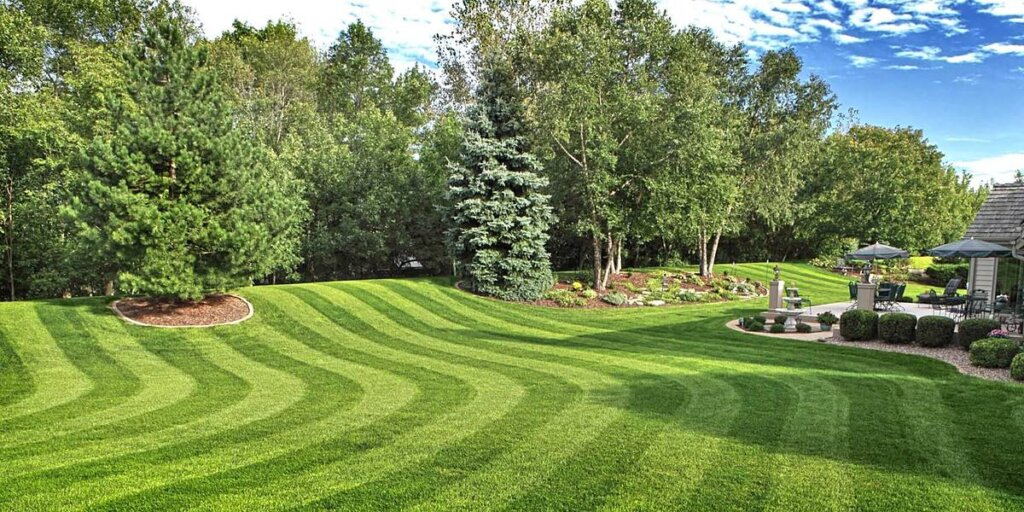
For a single tree ring or small front bed, DIY mulching is entirely reasonable. For a typical Montgomery County quarter-acre lot, a mid-range job runs 6 cubic yards, which is already 50 or more wheelbarrow loads before any compaction testing or product matching begins.
Properties with sloped lots or multiple established beds around mature trees are where the case for professional installation is clearest. Once you factor in depth assessment, compaction testing, and crown clearance work at every bed, a weekend job routinely turns into two.
Terra Lawn Care has been handling this work for homeowners across Montgomery, Chester, Bucks, Berks, and Delaware Counties since 2003. An in-house agronomist with 15 years of golf course turf management oversees every installation, and all work is done by Terra’s own state-certified technicians, with no outside crews. Terra retains 95 percent of its customers year over year, against a 70 percent industry average.
When the Hours Add Up
For full-service spring bed care that combines seasonal pruning and pre-emergent treatment with the mulch job, a professional crew usually costs less than most homeowners expect once they add up the actual hours.
For properties where the project extends into designing or rebuilding ornamental areas, Terra’s installation team can take that on as well.
Terra Lawn Care Specialists has served homeowners throughout Montgomery, Bucks, Berks, Delaware, and Chester Counties since 2003. Every technician holds full state certification across the Tri-State region. Call 610-275-2170 to schedule your free spring estimate.